
Latvian Vs Lithuanian: Key Differences And Similarities

Author
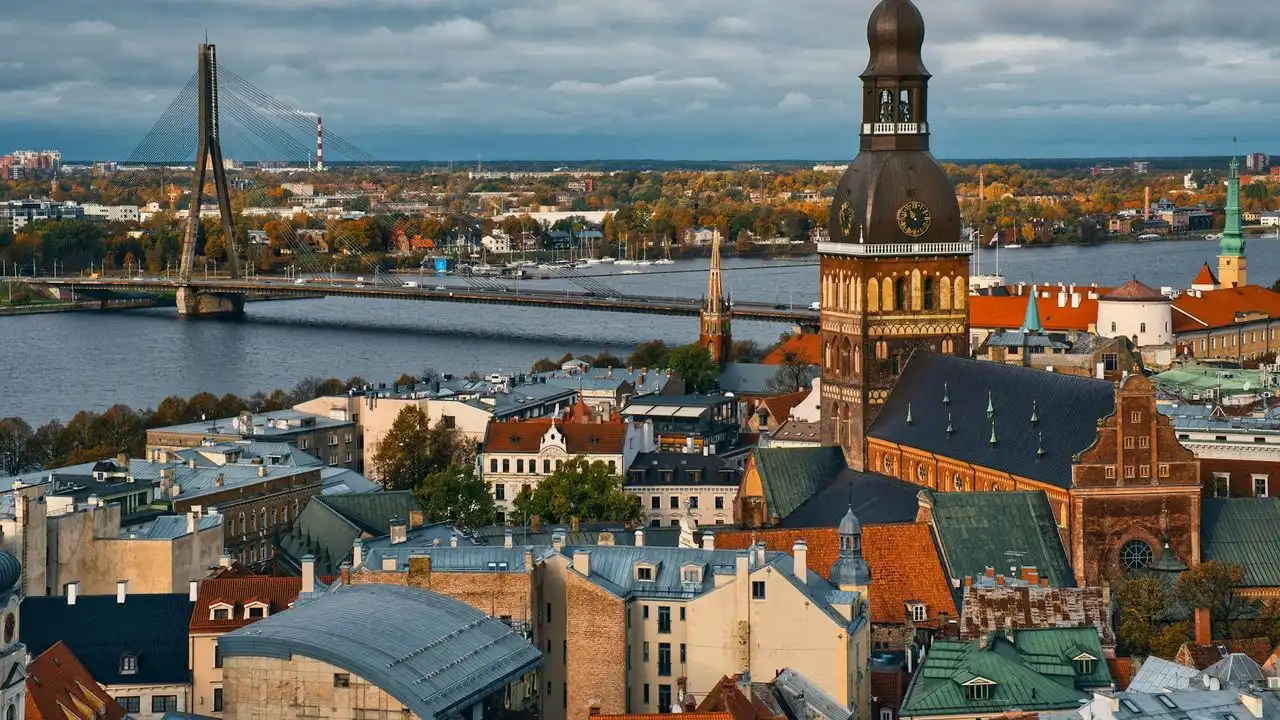
Latvian and Lithuanian are the only two surviving Baltic languages in the world today.
They share a deep historical connection and belong to the exact same language family.
Many people mistakenly assume they’re practically the same language.
This is entirely false.
A native Latvian speaker can’t naturally understand a Lithuanian speaker in conversation.
I’ll break down the exact similarities and differences between these two languages below.
Table of Contents:
Shared history and origins
Both languages evolved from a common ancestor called Proto-Baltic.
They split from each other roughly around the 5th to 7th centuries.
Lithuanian is famous among linguists for being extremely conservative.
It retained many ancient features from the original Proto-Indo-European language.
Latvian evolved much faster and underwent significant changes over the centuries.
This happened because Latvian territory was heavily influenced by Germanic crusaders and neighboring Finno-Ugric tribes.
Key similarities between Latvian and Lithuanian
The grammatical foundation of both languages is very similar.
Neither language uses articles like “a”, “an”, or “the”.
Both languages use a complex case system where the endings of words change depending on their role in a sentence.
They also both group nouns into two grammatical genders.
Nouns are strictly categorized as either masculine or feminine.
You’ll also find many core vocabulary words that look and sound almost identical.
Key differences in grammar and pronunciation
The most obvious difference when listening to these languages is the pronunciation.
Latvian has a strict and fixed stress rule.
The emphasis is almost always placed on the very first syllable of a word.
This gives Latvian a distinct, rhythmic flow influenced by the indigenous Livonian people.
Lithuanian utilizes a free pitch-accent system instead.
The stress in Lithuanian can fall on any syllable and even change depending on the word’s grammatical case.
Lithuanian grammar is also a bit more complex overall.
Lithuanian actively uses seven distinct noun cases, while modern Latvian generally relies on six.
Vocabulary comparison and false friends
Basic greetings and everyday words clearly show their shared origins.
Here’s a quick comparison of some common words.
| English | Latvian | Lithuanian |
|---|---|---|
| Hello | Sveiki | Sveiki |
| Thank you | Paldies | Ačiū |
| Yes | Jā | Taip |
| No | Nē | Ne |
| Water | Ūdens | Vanduo |
| Sun | Saule | Saulė |
Despite these similarities, there are many false friends between the two languages.
A false friend is a word that looks the same but means something completely different.
For example, the word elpa in Latvian means “breath”.
In Lithuanian, elpa means “behavior”.
Another funny example is the word for moose.
In Latvian, briedis means “deer”.
In Lithuanian, briedis means “moose”.
Recommended learning resources
If you’re deciding which Baltic language to learn, I highly recommend starting with Latvian.
Latvian pronunciation is significantly easier for English speakers to master due to the fixed word stress.
For the absolute best place to start your journey, I highly recommend Talk In Latvian.
It’s our dedicated platform designed specifically for mastering the Latvian language quickly.
We focus on real conversational skills rather than endless grammar drilling.
Here are a few basic phrases you can start practicing right now.
Sveiki, kā jums klājas?
Paldies, ļoti labi.
Jā, es runāju drusku latviski.
Here’s a quick breakdown of the best tools for learning Baltic languages.
| Platform | Language Focus | Best For |
|---|---|---|
| Talk In Latvian | Latvian | Overall fluency and natural dialogue practice. |
| Mondly | Latvian & Lithuanian | Basic vocabulary gamification. |
| italki | Latvian & Lithuanian | Finding native tutors for 1-on-1 lessons. |